Real Apple Watch scratches won't wipe away, and Apple advises against abrasive polishing. Clean gently first: residue can resemble a scratch, while a scratch that remains means choosing whether to leave it or ask for service.
A scratched screen protector is a separate case. Work out whether an added protector carries the mark, the watch's front glass or the metal case before trying to fix the wrong surface.
In this guide
1. Find which surface carries the mark
Take the watch off and look at it in good light. Turn the display off so reflections make surface marks easier to see. Check the front, the surrounding case and any protective film or cover you've added.
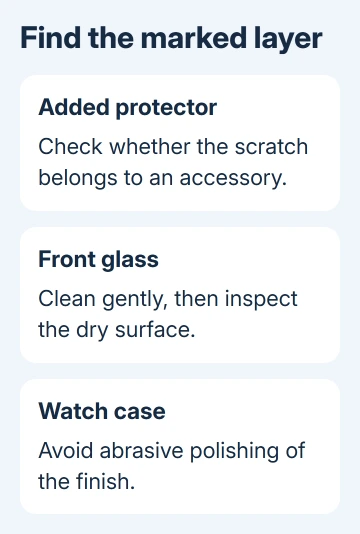
A protector may have a visible edge around the display. If the mark is on that added layer, follow the protector maker's removal and replacement directions. Don't treat a thin edge as permission to pry into the watch itself.
Look for a crack as well as a scratch. A line running across the glass, chipped material or a lifted display needs a service assessment. Polishing isn't an appropriate next step for a broken screen.
If the mark is on a removable cover, inspect the watch after taking that accessory off as its maker directs. With the accessory removed, you'll have a clearer view of the watch's own surface before deciding what to do.
You're checking for two different problems: a replaceable accessory that's scratched or damage to the watch itself. If the original glass or case carries the mark, continue with gentle cleaning before deciding how serious the damage is.
2. Clean off residue without grinding the surface
Turn the watch off and disconnect it from its charger. Remove the band if needed, especially a leather band that shouldn't get wet. For help releasing it, slide the Apple Watch band out correctly.
Use a nonabrasive, lint-free cloth to wipe the watch. If necessary, moisten the cloth slightly using fresh water. Apple's watch cleaning instructions describe this routine and advise against abrasive polishing.
Dry it with a nonabrasive, lint-free cloth, including the back crystal. Then look at the same area again. A mark that clears was on the surface; a line that stays hasn't been removed by cleaning.
Keep toothpaste, abrasive paste and polishing compounds away from the watch. Abrasives remove material instead of lifting dirt. The cleaning guidance also excludes soaps and other cleaning products for the watch itself.
I'd stop at the damp cloth for a cosmetic mark. If the first wipe doesn't remove a line, trying something stronger means working on the finish itself, rather than just cleaning off dirt.
Keep cleaning brief. Once the residue is gone and the watch is dry, inspect it rather than rubbing the same spot again. Then decide whether you can live with the mark or want a professional to assess it.
3. Leave genuine glass and case scratches out of DIY polishing
The front glass and metal case need different care. A bare-metal polishing product isn't automatically suitable for a finished watch case. A glass-polishing product isn't automatically suitable for the display either.
Watch models differ in case materials and front crystals. Read your model's specifications before discussing service. Two silver-looking watches can have different finishes, so care advice for one material may not suit the other.
The advice against abrasive polishing is there to protect the watch's finish and keep it working properly. It doesn't provide a separate home-polishing procedure for stainless steel, aluminum, titanium or the front crystal.
A small scratch that doesn't affect use can be left alone. Decide whether it actually makes the display hard to read or just catches the light from one angle. A cosmetic concern doesn't require an experiment with a powered polishing tool.
An added protector may change how a surface looks, but it doesn't restore scratched glass. Choose one for its fit and intended protective use rather than a promise that it rebuilds the original display.
If reflections make a light mark distracting, try a different watch face before paying for a repair. Changing the Apple Watch face changes what's displayed; it doesn't remove the damage or change the service decision.
4. Treat cracks and unreliable touch as damage
Check how the watch works after inspecting the mark. Can you read the screen, and does it respond where you normally tap? When arranging service, mention any areas that don't respond, any lifting of the display, or any broken pieces.
Don't use water to test whether a scratched or cracked watch still seals properly. A home immersion test won't repair anything and gives you another problem to deal with if liquid gets inside.
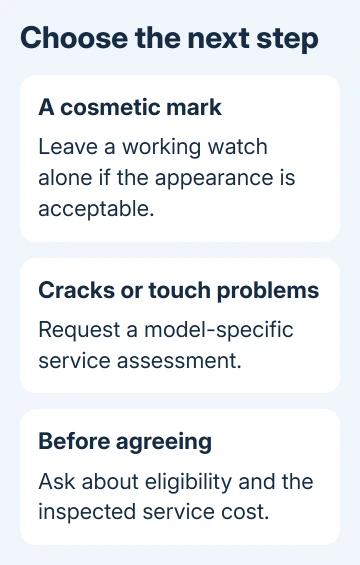
For a crack or a damaged display, use the Apple Watch service page. Describe both the physical damage and anything that no longer works so the provider can assess the whole problem.
Ask what service is available for your model, rather than requesting a guaranteed polish or a particular part replacement. Available service and its final cost depend on inspection, model and location.
If there are sharp or loose pieces, stop wearing the watch until a service provider has assessed it. Arrange service promptly rather than covering the area and treating it like an ordinary scratch.
5. Check the estimate and coverage before agreeing
Use the service page's estimate tool or help options to check your choices. The initial estimate can change after inspection. Authorized service providers can set their own fees, so get the price from the provider handling your watch.
The limited warranty covers manufacturing issues, while accidental damage is treated separately. Don't assume a scratch is covered just because the watch is within its first year or an AppleCare plan appears in your account.
Ask whether your coverage offers any service for cosmetic damage. Describe whether the screen is only marked or also cracked, unreadable or unresponsive. That gives the provider a useful starting point.
Compare the service quote with keeping your working watch. Leaving a cosmetic scratch alone is reasonable when repair costs too much. The cleaning instructions don't offer a home scratch-removal treatment to use instead.
The Short Version
Identify the marked surface, clean it with a lint-free cloth and fresh water if needed, then inspect it dry. Replace a scratched accessory separately. Avoid abrasive polishing and request a service assessment for damage to the watch itself.
Checked November 16, 2026.