A Surface keyboard that stops typing may have a poor connection, a Windows fault or damaged hardware. Reconnect the Type Cover and check its lights first, then test the keys in UEFI to see whether Windows is involved.
These checks cover attached Surface Pro and Go keyboards. A detached Flex Keyboard has a separate battery and wireless connection, so it needs Microsoft's Flex-specific instructions.
In this guide
Check the connector and the keyboard lights
Shut down the Surface and disconnect its power cable. Detach the keyboard, then look along the connector for dirt, damage or anything keeping the two edges apart. Reattach it with the magnets fully aligned.
Microsoft documents this sequence in its Surface keyboard troubleshooting. It applies to removable Pro and Go covers, not a Surface Laptop's built-in keyboard.
Status: Surface Pro and Type Cover guidance checked 22 October 2026. Owner reports include repairs that failed later. No Surface keyboard was tested here.
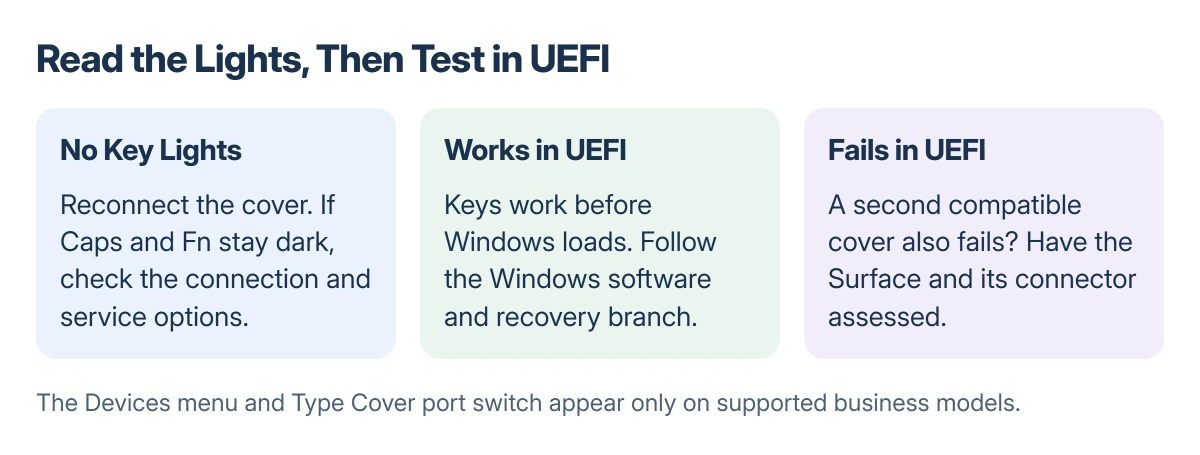
Press Caps and Fn a few times and watch their lights. If they respond, the keyboard has some communication with the Surface, though individual keys or the touchpad may still fail.
Microsoft says unresponsive lights after reconnecting the cover can indicate hardware trouble. Check service options before spending more time removing drivers.
For a screenshot of an on-screen error while the cover is disconnected, use the Surface tablet's capture controls.
Update the Surface, then use its model's restart
With a working touchscreen, open the Surface app and expand Help & support. Check the update status, choose Check for updates if offered, then install the available updates and complete the restart.
If inking stays broken after those updates, check Surface Pen power and shortcuts independently of the cover connection.
For Surface Pro 5 and later, Microsoft specifies holding the power button for a full 20 seconds after shutting down. Keep holding through the first logo until it appears again.
Surface Go and the other newer models listed by Microsoft use that sequence too. Surface Pro 4 and earlier models have different shutdown instructions, so check the model before using it.
If the tablet itself stays black, check the Surface charger and power response before assuming the detachable keyboard is the only fault.
A working keyboard with the wrong top-row actions is a separate case. Check the Surface Fn lock behavior before treating brightness keys as broken typing keys.
Test the keys before Windows starts
Turn the Surface off and wait 10 seconds. Hold Volume Up, press and release Power, and keep Volume Up held until the UEFI screen opens. Release it when that screen appears.
Distortion on a Pro 4 has its own screen scramble assessment. A keyboard failure and a scrambled panel can require separate service checks.
Try moving through the UEFI menu with the arrow keys. Microsoft states that a keyboard and touchpad working here but failing in Windows point toward a software problem.
Do not change unrelated firmware settings. The Type Cover port switch mentioned in Microsoft's instructions appears only on supported business models with a Devices menu. A missing menu on a consumer Surface is expected.
If the keys fail in UEFI, note whether the lights respond and whether a second compatible cover behaves the same way. These details help support assess the cover and the Surface connector.
One owner on Microsoft Q&A tried another Type Cover and removed a driver, but the keys still failed in UEFI. The cover briefly recovered, then failed after the Surface was closed. That result does not confirm a driver repair.
If typing works in UEFI but fails in Windows
Check Settings > Accessibility > Keyboard in Windows 11. Filter Keys can ignore quick presses, while Sticky Keys changes modifier behavior. Switch off an accidentally enabled option and test ordinary text again.
Windows 10 places those controls under Ease of Access > Keyboard. They explain altered typing, not a physically disconnected cover with no lights.
For a persistent Windows-only failure, Microsoft's next route is Windows recovery. Back up important files and have the device's recovery information available before considering it.
The Keep my files reset retains personal files but removes installed apps and settings changes. Before taking that recovery step, ask Surface support to review the UEFI result.
The Surface reset procedure separates Keep my files from factory USB recovery, which erases the tablet's personal files.
If a separate USB keyboard works in Windows but stops in the repair screens, use the Windows Recovery keyboard checks. That environment has its own input limitations.
When to arrange service
A damaged connector, broken keys or failure with another compatible cover deserves a hardware assessment. Check the Surface and separately purchased keyboard's warranty through Microsoft's device service options.
An owner in an older Q&A discussion reported a week of improvement after driver cleanup, followed by the same fault. Another received a warranty replacement. The reports give no basis for promising a lasting driver fix.
If a second compatible cover also fails, have the Surface assessed before buying a replacement keyboard. Keep the light and UEFI results with the service request.
The Short Version
Reconnect the cover and check Caps and Fn lights. Install Surface updates, use the restart for your model, then try the keys in UEFI. Windows-only trouble follows the software route; failure before Windows needs service assessment.
Where to Next
Give Surface support the model, the light behavior and the UEFI result. Those three details help them decide whether to assess the cover, the tablet connector or Windows.